- Shipping World-Wide

Occasion Abayas UK: Which Style Fits Which Event

Choosing the right occasion abaya in the UK comes down to one question most women ask themselves before an event: does this abaya match what the day actually calls for. An abaya for a wedding is not built the same way as an abaya for umrah, and an abaya you wear to the office should not be the one you save for Eid morning. Getting this wrong is more common than people admit. A heavily embellished abaya bought for a summer wedding can feel completely out of place at an evening dinner, and a plain everyday piece worn to a formal Eid gathering can leave someone feeling underdressed among family. This guide breaks occasion abayas down by event, covering fabric, colour, fit and the practical realities of UK weather, so you can go straight to the style that fits what you are actually dressing for.
How to Match an Occasion Abaya uk to the Event
Before looking at specific occasions, it helps to understand the three things that genuinely separate one occasion abaya from another: formality, fabric weight and colour, and none of these three work in isolation from the others.
Formality is the first filter most women apply, often without realising it. A funeral or a mosque visit calls for a plain, closed abaya in black or another dark neutral, with little to no embellishment. A wedding or Eid celebration opens the door to structure, embellishment and richer colour, with cuts like the coat abaya or butterfly abaya suited to this higher formality tier. Everyday occasions sit in between, favouring simple, practical styles that hold up to a full day of wear without demanding constant attention.
Fabric weight follows the UK climate and the setting as much as the occasion itself, and this is where a lot of buyers get caught out. Velvet and heavier crepe suit winter weddings and Eid gatherings held indoors, where central heating and layered clothing make heavier fabric comfortable rather than stifling. Linen and lightweight jersey suit umrah travel and warm weather everyday wear, since both involve long hours of movement where breathability matters more than structure. A beautiful embellished velvet abaya bought for a summer Eid can feel completely wrong once you are standing in a warm marquee or a crowded family gathering for several hours, no matter how well made the piece is.
Colour carries its own etiquette in modest fashion that UK shoppers are often less familiar with than shoppers in Gulf countries, where these conventions are more established. Black remains the standard for funerals and more solemn occasions, and wearing a bright colour to this kind of event can read as genuinely out of place rather than simply a style choice. Muted or jewel tones such as forest green, dusty pink and navy work well for everyday and semi formal wear, since they photograph well without demanding the attention that brighter shades do. Brighter colours, gold detailing and richer fabrics are generally reserved for Eid and weddings, where celebration is the entire point of the outfit rather than something to be understated.
Once you know where your occasion sits across these three scales, picking the right abaya becomes far simpler, and it also becomes easier to justify the cost of a more premium piece when the occasion genuinely calls for it.
Eid Abayas
Eid is usually the one occasion in the year where UK Muslim women invest in a genuinely new piece rather than reaching for something already in the wardrobe, and this shows in how differently Eid abayas are designed compared to everyday pieces. Eid abayas tend to lean into richer fabrics such as velvet and satin, brighter colours including pink, gold and jewel tones, and more visible embellishment along the cuffs, hem or front panel. Embroidery, subtle beading and contrast piping all appear far more often in this category than in any other occasion.
Because Eid falls on a different date each year and can land in any season depending on the lunar calendar, checking the actual weather for the date matters more than most people expect when planning what to wear. A velvet Eid abaya bought for a summer Eid will genuinely be too warm for a full day that includes morning prayers, visiting extended family and often several hours outdoors between houses. Many women in the UK now keep two Eid pieces in rotation for exactly this reason, one lighter weight for warmer years and one heavier for winter Eid.
Sizing also matters more for Eid than for everyday wear, since these pieces are often worn for photographs and family gatherings where fit is noticed in a way it simply is not during a normal week. Our Eid Abaya Collection covers the full range of Eid specific cuts and fabrics if this is the occasion you are shopping for, including options across both lighter and heavier fabric weights.
Wedding and Bridal Abayas
Weddings split into two distinct categories that are easy to confuse when shopping, and getting this distinction wrong is one of the most common mistakes UK shoppers make in this category.
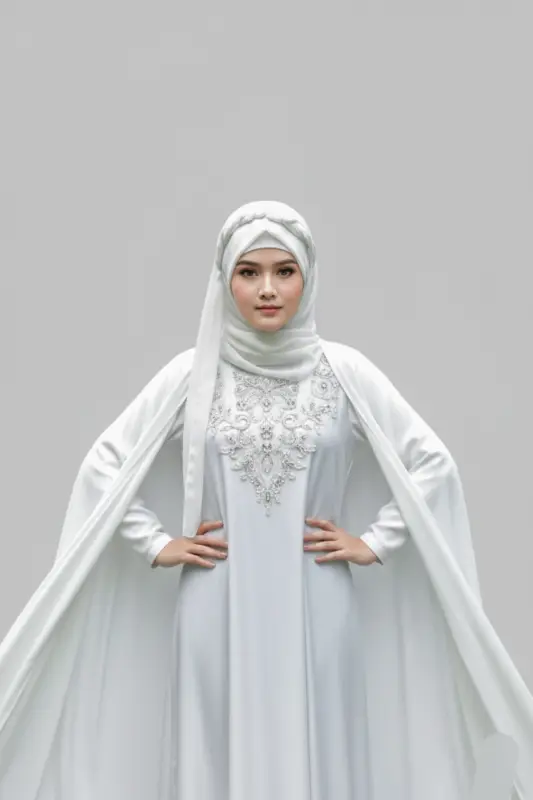
A bridal abaya is built for the bride herself, often in white, ivory or soft pastel tones, with heavier embellishment, a more structured silhouette and sometimes a matching bridal hijab designed specifically for the day. These pieces are typically made to order or fitted well in advance, since a nikah or walima outfit needs to sit correctly for hours of photographs and formal proceedings. Our dedicated Bridal Abaya UK guide covers everything specific to nikah and walima dressing, including how far in advance to order and what to check during fitting.
A wedding guest abaya sits in a completely different space. Guests typically choose richer colours such as emerald, burgundy or navy rather than white, with embellishment that complements rather than competes with the bride and the bridal party. This is a genuine point of etiquette in modest fashion circles, since wearing white or a colour too close to the bride’s palette can be seen as inappropriate regardless of intent. Our Wedding Abaya UK guide focuses specifically on this guest side of wedding dressing, including how to avoid accidentally matching or outshining the bridal party and how formal to dress depending on the specific event within a multi day wedding celebration.
Umrah and Hajj Abayas
Umrah calls for an entirely different set of priorities compared to Eid or a wedding, and this is one occasion where practicality should genuinely outweigh appearance in the decision making process. Comfort during long hours of walking and prayer, ease of movement, and durability across repeated travel all matter more than embellishment here. A plain, closed abaya in a breathable fabric such as linen blend or lightweight jersey is the standard choice, since it needs to perform well across airport travel, standing for tawaf, and repeated prayer positions throughout a demanding schedule.
Pockets become genuinely useful for this occasion in a way they rarely are elsewhere, since carrying a phone, prayer beads or small items without a bag free hand matters during crowded periods. Colour tends to stay simple too, with black, navy and grey remaining the most practical choices for a trip that involves crowds, dust and long days where a lighter coloured abaya would show marks quickly. Our Umrah Abaya for Women guide goes into the specific fabric and fit recommendations for this occasion in far more detail, including packing advice for women travelling with limited luggage space.
Office and Everyday Abayas
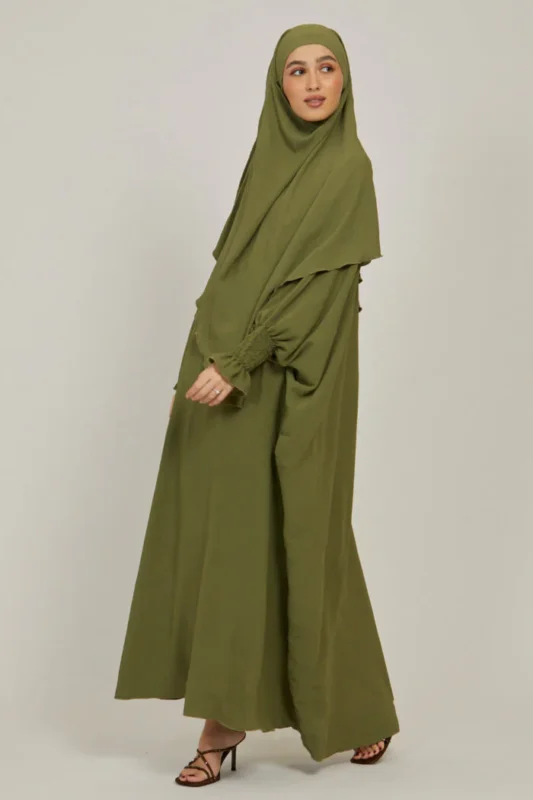
Everyday and office abayas do not get the same attention as Eid or wedding pieces, but they are worn far more often, which makes getting this category right arguably more important for genuine day to day comfort than any single occasion piece. The coat abaya has become a genuine favourite for UK office wear, since its structured, tailored cut reads as professional in a way that softer, more flowing styles sometimes do not in a formal workplace setting. The straight lines and defined shoulder of a coat abaya translate well into office environments that expect a certain level of polish.
For everyday wear outside the office, practicality tends to win out over structure. Pockets, machine washable fabrics and a slightly more relaxed cut all matter more here than they do for occasion specific pieces, since an everyday abaya needs to survive the school run, grocery shopping and general daily movement without requiring careful handling. Neutral colours such as black, grey, taupe and navy also work harder in an everyday wardrobe, since they pair easily with different hijab colours and do not show wear as quickly as pale or embellished pieces do after repeated washing.
Layering matters here too. A jersey abaya under a coat in UK winter needs to allow enough room for an extra layer beneath it, something that is easy to overlook when trying an abaya on in a warm shop rather than in actual winter conditions.
Evening and Formal Abayas
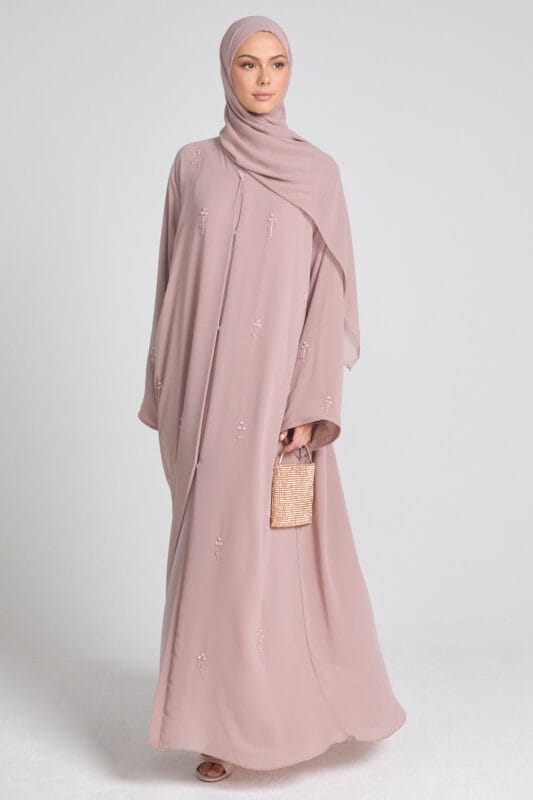
Evening events, whether a formal dinner, an engagement party or a milestone family celebration, call for abayas that sit between everyday practicality and full Eid or bridal formality. Satin, crepe and velvet all suit evening wear well, and this is one of the few occasion categories outside Eid and weddings where deeper jewel tones and metallic detailing genuinely suit the setting rather than feeling excessive.
The closed abaya and butterfly abaya cuts both work well for evening events, since they offer enough structure to look put together without the heavier embellishment level of a bridal piece. A well chosen evening abaya in a single rich colour, paired with a coordinating hijab, often reads as more elegant than one with heavy embroidery, particularly for dinners or gatherings where the setting itself is already formal.
Occasion to Fabric Quick Reference
| Occasion | Recommended Fabric | Typical Colours |
|---|---|---|
| Eid | Velvet, satin, crepe | Pink, gold, jewel tones |
| Wedding (guest) | Crepe, satin | Emerald, burgundy, navy |
| Bridal | Satin, embellished crepe | White, ivory, pastel |
| Umrah | Linen blend, lightweight jersey | Black, navy, grey |
| Office | Structured crepe, coat fabric | Black, grey, taupe |
| Everyday | Cotton blend, jersey | Neutral tones |
| Evening | Satin, velvet | Jewel tones, metallics |
Getting the Fit Right Across Occasions
Fit affects how formal or casual an abaya reads almost as much as fabric and colour do, and this is true across every occasion covered here. An abaya that is too loose can look unfinished even in an expensive fabric, while one that is too tight loses the modest silhouette that defines the garment in the first place. Sizing conventions also differ between UK sizing and the Gulf numbering system many abayas are still sold under, which causes genuine confusion for first time buyers. If you already know your measurements, our Abaya Size Guide is worth checking before ordering for any occasion covered in this guide, since it converts between these systems and explains where each style typically runs small or generous.
According to the British Fashion Council’s guidance on modest fashion, the UK modest fashion sector has grown specifically because of this kind of occasion led, considered approach to dressing rather than a one size fits all model, with shoppers increasingly expecting the same range of formality and fabric choice in modest wear that exists in mainstream fashion. Getting the occasion right before the fabric and colour saves both money and wardrobe regret, since an abaya bought for the wrong setting tends to sit unworn regardless of how well made it is.