- Shipping World-Wide

Best Hijab Fabric for Everyday Wear: Jersey vs Modal vs Chiffon

Choosing a hijab is not only about colour or style. The fabric affects how comfortably it sits, how much it slips, how it drapes around the face, and how much effort it takes to keep it looking neat throughout the day.
For women in the UK, a hijab may need to work for a commute, university, work, shopping and family commitments without requiring constant adjustments.
Three fabrics worth comparing are jersey, modal and chiffon. Jersey is known for its stretch, modal often has a soft, flowing drape, and chiffon creates a lightweight, polished finish. Each has advantages, and none is automatically the best choice for every wearer.
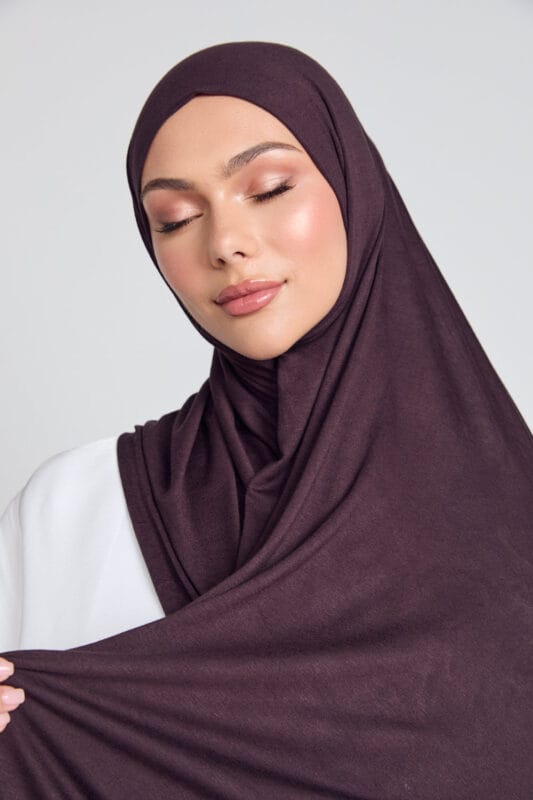
This guide compares their everyday performance, explains which fabric suits different routines, and covers what to check before buying a hijab online.
Which Hijab Fabric Is Best for Everyday Wear?
Jersey is often a practical starting point if you want stretch and a fabric that can stay securely in place. Modal is worth considering if you prefer a softer, more fluid drape. Chiffon works well when you want a lightweight, refined appearance and do not mind taking extra care with fastening and coverage.
The right choice depends on four things:
- Grip: Does the hijab stay in place, or do you keep adjusting it?
- Coverage: Is the fabric sufficiently opaque for your preferred style?
- Comfort: Does it feel comfortable after several hours of wear?
- Maintenance: Can you wash, dry and wear it again without too much effort?
Your preferred hijab style matters too. A fabric that works beautifully in a loose drape may behave differently in a tightly wrapped style.
Jersey vs Modal vs Chiffon: Quick Comparison
| Feature | Jersey | Modal | Chiffon |
|---|---|---|---|
| Feel | Soft and stretchy | Often soft and fluid | Lightweight and smooth |
| Stretch | Usually good | Depends on construction | Usually limited |
| Grip | Often good | Varies by finish | Usually lower |
| Coverage | Depends on weight and colour | Depends on weave and colour | Often requires layering |
| Drape | Relaxed and slightly structured | Flowing and soft | Light and elegant |
| Everyday use | Useful for low-fuss routines | Good for flowing styles | Suitable if securely fastened |
| Care | Often straightforward | Depends on blend | May require gentler handling |
These are general characteristics, not guarantees. A lightweight jersey can behave differently from a heavier one, and two scarves labelled modal may have different fibre blends, finishes and opacity.
1. Jersey Hijabs: Practical for Busy Days
Jersey is a knitted fabric with some stretch. That flexibility makes it easy to shape around the head and adjust to different styles.
For everyday wear, its main advantage is convenience. A well-made jersey hijab can sit securely with fewer adjustments than a smoother fabric, making it useful when you have a long day ahead.
Why choose jersey?
- Flexible styling: Stretch helps the fabric wrap around the head without feeling rigid.
- Useful coverage: Many jersey hijabs provide good opacity, although lighter colours and thinner constructions still need checking.
- Less fuss: Its texture often makes it easier to manage than slippery fabrics.
- Versatility: It can suit errands, university, work and casual outfits.
What should you consider?
Jersey can feel warmer or heavier than a very lightweight scarf, particularly if the fabric is thick or contains a substantial synthetic component. If you spend time walking, travelling on public transport or sitting in heated buildings, consider the fabric’s weight rather than assuming every jersey hijab will feel the same.
Jersey is also not necessarily pin-free for everyone. The result depends on the cut, fit, undercap and style you prefer.
Best suited to: Women who want a dependable everyday hijab and prefer practicality over a delicate drape.
For more detailed advice, read Alabayae’s Jersey Hijab: The Complete UK Guide.
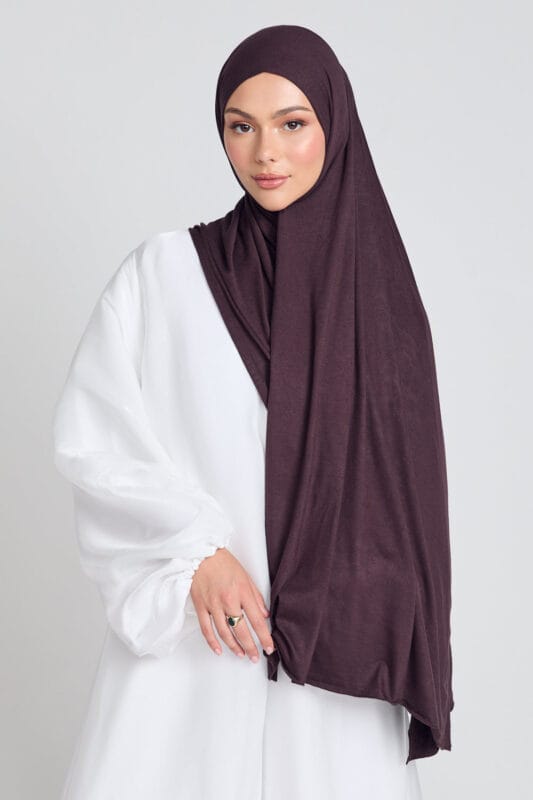
2. Modal Hijabs: Softness and a Flowing Drape
Modal is a regenerated cellulose fibre derived from wood pulp. Its properties depend on the specific fibre, fabric construction and finishing process. Some modal fabrics are valued for their soft feel and fluid drape. Learn about TENCEL™ Modal fibre properties.
Modal hijabs appeal to wearers who want a softer, less structured appearance than many jersey styles.
Why choose modal?
- Soft texture: Modal fabrics are often valued for their smooth feel.
- Fluid appearance: They can fall naturally around the shoulders and create soft folds.
- Flexible styling: Modal can work with relaxed everyday outfits and smarter looks.
- Potential comfort in mild weather: Lightweight constructions may feel comfortable when a heavier scarf would be too warm.
What should you consider?
Modal is not a guarantee of a non-slip or completely opaque hijab. Some versions are blended with other fibres, and the weave, colour and fabric weight affect the final result.
A thin, pale modal scarf may need an undercap or another layer. Some modal fabrics can also wrinkle or require gentle care, so read the care label rather than assuming every modal product is low-maintenance.
Best suited to: Women who prefer a soft, flowing appearance and want a scarf that can complement both everyday and smarter outfits.
Before choosing modal, check the exact composition and opacity of the product. The fibre name alone cannot tell you how the finished scarf will behave.
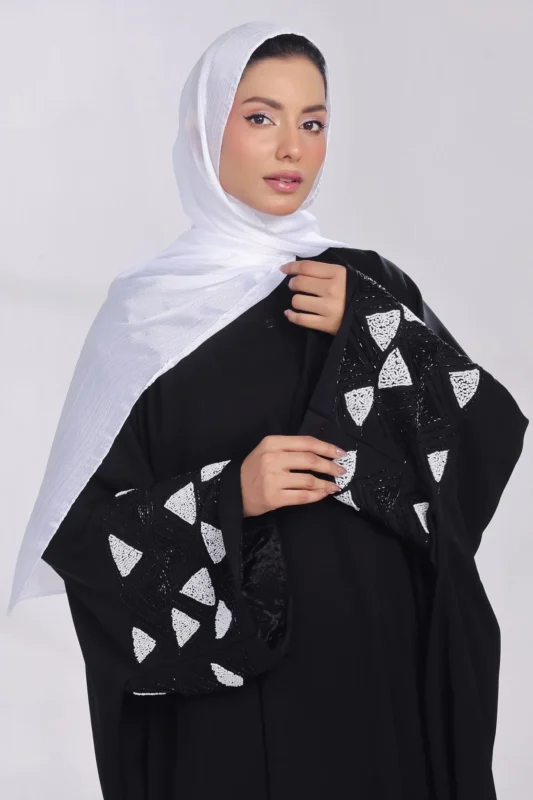
3. Chiffon Hijabs: Lightweight and Polished
Chiffon is a lightweight fabric commonly used for its delicate appearance and flowing finish. It can create elegant folds without the bulk of a heavier knit.
It is often chosen for occasions, but it can also work for everyday wear if you like its appearance and are comfortable securing it properly.
Why choose chiffon?
- Light visual weight: It creates a fine, airy-looking layer.
- Elegant drape: Its folds can complement occasion outfits and tailored modest wear.
- Layering options: It can be arranged in different ways around the face and shoulders.
- Versatility for dressier outfits: Chiffon can pair well with an abaya, formal dress or coordinated occasion ensemble.
What should you consider?
Chiffon is generally smoother and less stretchy than jersey, so it may move more easily during wear. An undercap, suitable hijab magnets or pins can help secure it, depending on your styling preference.
Many chiffon scarves are translucent, but opacity varies by fabric construction and colour. If full coverage is important to you, inspect the fabric carefully and consider how it looks when held against light.
Chiffon may also be more vulnerable to snags or damage from rough fasteners. Gentle handling is sensible, especially around delicate finishes.
Best suited to: Women who want a refined, lightweight look and do not mind spending a little more time arranging their hijab.
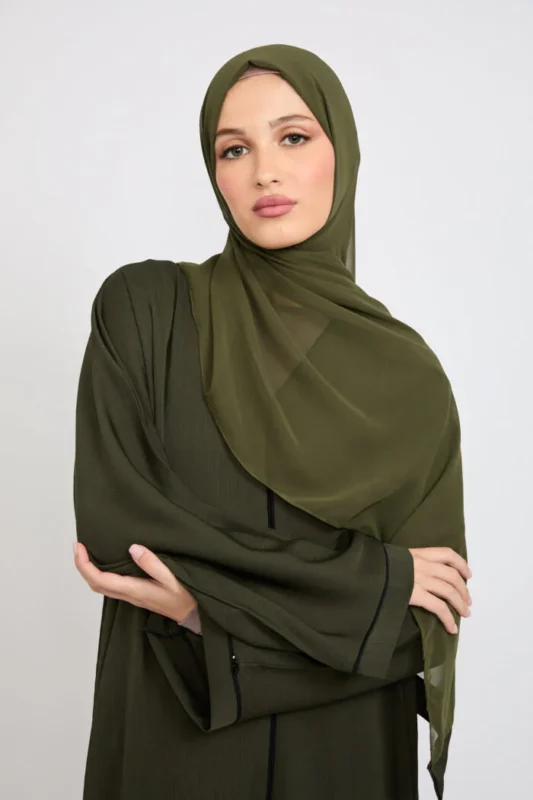
Which Hijab Fabric Works Best for Different Situations?
Rather than buying according to a trend alone, match the fabric to the way you actually dress.
For work and university
Jersey can be useful if you want a scarf that is easy to arrange before leaving home. Modal is another option if you prefer a softer drape with professional or smart-casual clothing.
If you spend long periods in heated buildings, consider thickness and breathability as well as appearance.
For commuting and everyday errands
If you frequently walk, travel on public transport or move between activities, a fabric that requires fewer adjustments can make your routine easier. Jersey often performs well here because of its stretch and grip.
The best choice is the one that remains comfortable and secure during your normal day, not simply the one that looks best in a product photograph.
For warmer days
Start by considering fabric weight and construction. A lightweight modal scarf may provide a soft drape, while chiffon offers a light visual finish. A thin jersey may also work, depending on its composition.
No fabric name guarantees that a hijab will feel cool. Fibre content, thickness, layering and the weather all affect comfort.
For Eid, weddings and special occasions
Chiffon can complement formal outfits when you want delicate folds and a refined finish. Modal can also work for an elegant look, while jersey may suit someone who prioritises secure, comfortable wear throughout a long event.
Choose a fabric that complements the outfit without making you uncomfortable or requiring constant readjustment.
For travel and long days away from home
Consider how easily the scarf packs, how much it wrinkles, how quickly it dries and whether it needs special care. A practical jersey or easy-care modal may suit some travellers, while chiffon can be worth packing when you need a more formal option.
Always check the individual care instructions rather than relying on the fabric category alone.
How to Choose a Hijab Fabric When Shopping Online
A product photograph can show colour and styling, but it cannot fully communicate texture, weight, stretch or opacity. Before ordering, check the details most likely to affect your experience.
1. Check the fabric composition
Look for the actual fibre content rather than relying only on a product name such as jersey, modal or chiffon. Blends can behave differently from fabrics made primarily from one fibre.
2. Check the dimensions
Hijab length and width affect how much coverage and styling flexibility you have. If you prefer wrapping the scarf several times or draping it over your shoulders, dimensions matter.
3. Look for opacity information
If coverage is a priority, check whether the product description explains the fabric’s opacity. When information is missing, ask the retailer for clarification.
Colour also matters. A pale scarf can appear more translucent than a dark one made from a similar fabric.
4. Read the care instructions
Consider whether the scarf needs hand washing, a delicate cycle, air drying or careful ironing. Choose something you can realistically maintain.
5. Think about fastening
If you dislike pins, jersey may be a sensible starting point. If you prefer chiffon, plan for a suitable undercap or fastening method that works with the fabric without damaging it.
For general textile-care advice, consult the GINETEX care-label guidance.
Matching a Hijab to Your Abaya
The fabric is only one part of a coordinated outfit. Colour, texture, coverage and the occasion all influence how the finished look comes together.
For a simple everyday outfit, a plain hijab in a complementary neutral can work with a more detailed abaya. If your abaya already features embroidery or a distinctive cut, a quieter scarf may help maintain balance.
For formal occasions, chiffon can create a softer finish, while jersey or modal may suit a more relaxed outfit.
Explore these related Alabayae guides:
- How to Style an Abaya
- Hijab Styles for UK Muslim Women
- Modest Co-ord Sets UK
- Khimar and Abaya Set Guide
If you want a coordinated modest outfit without choosing every piece separately, Alabayae offers selected abayas that include a matching hijab. For example, the Black Umbrella Cut Closed Abaya includes a matching hijab and fabric belt. Check the product page for current availability, sizing and care details.
Frequently Asked Questions
What is the best hijab fabric for everyday wear?
Jersey is a practical choice for women who value stretch, grip and easy styling. Modal is worth considering if you prefer a soft, flowing drape. The best option depends on your comfort preferences, routine and the specific fabric construction.
Is jersey or modal better for daily use?
Jersey generally offers more stretch and grip, while modal is often chosen for its soft feel and fluid appearance. If your main frustration is a hijab that slips, try a well-fitting jersey style. If you prefer a flowing drape, consider modal and check its opacity.
Is chiffon suitable for everyday hijab wear?
Yes. Chiffon can be worn every day if you like its lightweight appearance and are comfortable securing it. Because it is often smoother and less stretchy, you may need an undercap or fastener to keep it in place.
Which hijab fabric is least likely to slip?
Jersey often provides stronger grip than smoother fabrics such as chiffon. However, fit, fabric finish, the undercap you wear and your preferred wrapping style also affect how securely a hijab stays in place.
Is modal hijab fabric see-through?
It depends on the fabric’s weight, construction, colour and blend. Do not assume every modal hijab is opaque. Check product information and ask the retailer if you need confirmation.
Which hijab fabric is best for summer in the UK?
Consider lightweight constructions of modal, chiffon or jersey, depending on your preferred coverage and styling. The actual fibre blend and thickness are more useful indicators than the name alone. Layering and local weather also affect comfort.
Do I need an undercap with every hijab?
No. Some jersey styles may stay secure without one, while smoother or more translucent fabrics may benefit from an undercap. Your choice depends on the fabric, coverage requirements and how you prefer to wear your hijab.
How many everyday hijabs should I own?
There is no fixed number. A practical starting point is to have a few scarves in colours that coordinate with the outfits you wear most often. If you find different fabrics useful for different routines, keep one easy-care option and another for dressier occasions.
The Bottom Line
The best hijab fabric is the one that fits your routine, coverage preferences and styling needs.
Choose jersey if you want stretch and practical grip. Consider modal if softness and a flowing drape matter most. Choose chiffon when you prefer a lightweight, polished finish and are comfortable securing it.
Before buying, check fabric composition, dimensions, opacity and care instructions. Those details will tell you far more about how a hijab is likely to perform than a trend label alone.
For a coordinated modest outfit, explore Alabayae’s abaya and khimar collections and check the details of each product before ordering.