- Shipping World-Wide

Hijab Styles: The Complete Guide for UK Muslim Women in 2026

The hijab is not one thing. This is the first thing worth saying clearly, because the word gets used as if it describes a single style, a single look, a single way of covering and anyone who actually wears hijab knows that is not even close to the truth. Hijab is a category, and within that category live dozens of distinct styles, dozens of fabric choices, dozens of ways to pin, wrap, drape, and layer that produce completely different effects on the face, the outfit, and the overall look.
For Muslim women in the UK, this variety has expanded dramatically over the past decade. The modest fashion scene in cities like London, Birmingham, Manchester, and Leicester has grown into a genuine creative community, and the hijab has grown with it. What was once a relatively limited set of options plain jersey wrap or formal pinned chiffon — is now an entire dimension of personal style with its own rules, its own trends, and its own relationship to the rest of the outfit.
At Alabayae we work with modest fashion every day and the hijab question comes up constantly what style works with which abaya, which fabrics suit UK weather, how to dress a hijab up or down for different occasions. This guide covers it all properly.
Understanding Hijab as a Concept Before Covering the Styles
Hijab in its Islamic meaning refers to the concept of modesty in dress and behaviour, not specifically to the headscarf. The headscarf itself is more precisely called a khimar in classical Arabic, though in contemporary usage in the UK and globally, hijab has become the common term for the headcovering itself.
The Quran and hadith provide the foundation for modest dress, and different scholarly interpretations have led to different understandings of what constitutes appropriate hijab. What matters for this guide is not to adjudicate between those interpretations but to serve every woman who covers her hair as part of her faith or cultural practice — whether her preference is a simple wrap that shows the neck or a full coverage style that covers the chest and shoulders completely.
What all hijab styles have in common is the intention: to dress modestly, to cover in a way that feels authentic, and increasingly in the UK context, to do so in a way that also reflects personal aesthetic sensibility and contemporary fashion awareness.
The Main Hijab Styles | A Complete Breakdown
The Jersey Hijab Wrap
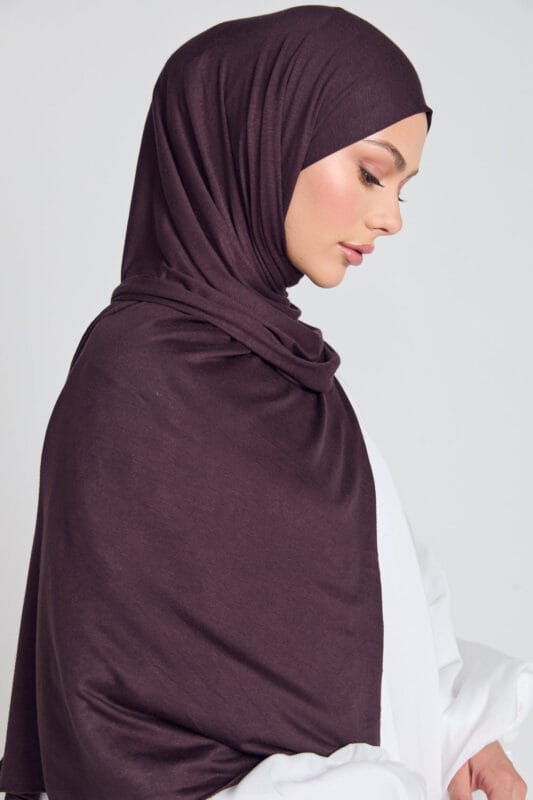
This is the most popular everyday hijab style in the UK and for good reason. Jersey is a stretchy, forgiving fabric that requires no pins, holds its shape through an entire day, and comes in every conceivable colour. The standard jersey wrap involves draping the scarf over the head with one side longer than the other, pulling the longer side across the front of the face and tucking or pinning it at the other side, then draping the remaining length over the shoulder.
Jersey is the fabric of choice for school runs in Birmingham, office mornings in Manchester, and grocery trips in East London because it is fast, comfortable, and requires almost no maintenance. The stretchy nature means it stays in place without constant adjustment and the matte finish photographs naturally without picking up flash glare.
For wearing with an open abaya, a jersey hijab in a complementary colour — same tone family as the abaya but not necessarily identical — creates an effortlessly coordinated look.
The Chiffon Wrap
Chiffon is the occasion fabric. It has a softness and drape that jersey cannot replicate and it catches light in a way that makes photographs look genuinely beautiful. The trade off is that chiffon requires more pins, more adjustment during the day, and more care in windy UK weather — it moves significantly more than jersey.
The most popular way to wear chiffon in the UK is the simple drape — one side longer, folded back and pinned under the chin, with the longer side draped loosely over the shoulder and secured with a pin or tucked into the neckline of the abaya. A second pin at the chest keeps everything in place.
Chiffon works particularly well with embroidered or designer abayas from our hand embroidered collection because the softness of the chiffon complements rather than competes with the embellishment detail on the garment.
The Undercap and Inner Style
Almost all hijab styles in the UK are worn over an undercap — a fitted cap in jersey or cotton that covers the hairline and keeps the hijab in place. The undercap is the foundation that makes most styles possible because it prevents the headscarf from sliding back and exposing hair at the front.
Common undercap styles include the full coverage cap that covers all hair including the neck, the tube undercap that covers only the crown and can be combined with a neckband, and the sports undercap in moisture-wicking fabric for active wear. For most everyday styles the full coverage undercap is the standard choice.
The Pashmina or Shawl Style
A pashmina or large shawl worn as a hijab gives maximum coverage and a very elegant, voluminous silhouette. This style is particularly popular for Eid prayers, nikah ceremonies, and formal family gatherings because the volume and drape read as dressed up even in a simple colour.
The classic pashmina wrap involves centring the shawl on the head, bringing both ends forward, crossing one over the other at the chest, and draping both ends over the shoulders or pinning them at the back. The volume at the top of the head creates a naturally elevated silhouette that works beautifully with floor-length abayas.
The Turban Style
A more contemporary interpretation of modest head covering — a wrapped turban that covers all the hair in a structured, architectural style. The turban has become very popular among younger UK Muslim women who wear hijab in professional or creative environments because it reads as fashion-forward rather than traditional.
Turban styles range from the simple twisted wrap in a single piece of jersey to more elaborate constructed turbans with volume and shaping. Some women in the UK wear turban-style headcovering while others consider it insufficient coverage under their personal understanding of hijab requirements — this is a personal and scholarly question rather than a matter of style.
The Khimar Style
The khimar is a specifically Islamic outer covering that drapes over the head and extends to cover the chest and sometimes the arms. Unlike a regular headscarf worn with a separate outfit, the khimar is designed as a complete upper body covering worn over any clothing.
Khimars have grown significantly in popularity in the UK in recent years, driven partly by their practicality — one garment covers both head and chest without requiring careful hijab pinning — and partly by the influence of Gulf modest fashion aesthetics. Our abaya with khimar sets combine a matching khimar with a coordinating abaya for a complete modest outfit in a single purchase.
The Niqab
The niqab covers the face in addition to the head, leaving only the eyes visible. Niqab is worn by a minority of Muslim women in the UK but is a visible part of the modest fashion community. This guide covers it briefly for completeness — niqab styles in the UK typically involve a separate face veil worn with a full khimar or over a regular hijab and abaya combination.
Hijab Styles by Occasion
For everyday wear in UK cities — jersey hijab in a neutral or toning colour, worn simply and without excessive volume. The goal is comfort and staying power through a full day. Colours that work for everyday: black, navy, warm ivory, camel, grey, blush. These neutrals rotate with everything in a modest wardrobe without requiring colour matching.
For work and professional settings — a plain jersey or modal hijab in a colour that works with the outfit, pinned neatly without loose ends. Professional hijab styling in the UK has evolved significantly — the most polished office hijab looks are actually the simplest, where the fabric lies flat and the overall silhouette is clean. Women working in London’s financial and legal districts, Manchester’s media sector, and Birmingham’s business community have made this look mainstream.
For Eid and celebration occasions — chiffon or georgette hijab in a colour that complements the abaya, with a decorative pin or brooch at the chest. The occasion is reflected in the fabric quality rather than in volume or complexity — a simple chiffon drape in the right colour reads as dressed up immediately. Our designer pret collection includes occasion abayas that pair naturally with georgette hijabs in complementary tones.
For sports and active wear — a sports undercap in moisture-wicking jersey worn under a second layer of jersey or bamboo hijab. Many UK Muslim women who exercise, swim, or play sports have developed their own practical hijab adaptations — the modest sportswear market has grown substantially in recent years. The key principles are secure pinning, moisture management, and a silhouette that does not create drag or restrict movement.
For Umrah and prayer — a simple, clean white or neutral coloured hijab with full coverage, worn simply without decorative pins or excessive volume. For prayer specifically, the hijab needs to cover all hair and the neck, often worn with a full-length prayer abaya from our essential abayas collection.
Matching Hijab to Your Abaya — The Rules That Actually Work
The relationship between hijab colour and abaya colour is where most modest fashion styling decisions either succeed or fall apart. Here is the framework that works consistently:
For black abayas — almost any hijab colour works because black is a neutral that grounds everything. White and ivory create a classic contrast. Dusty pink and blush add warmth. Navy and charcoal create a monochrome effect. The only colours that tend not to work well with black abayas are very saturated, heavily toned colours that compete rather than complement.
For coloured abayas — the hijab should either match the abaya exactly for a monochrome look, or be a neutral that sits between the abaya colour and your skin tone. A dusty rose abaya with a warm ivory hijab always works. A sage green abaya with a warm sand hijab always works. These combinations use the neutral hijab to bridge the coloured abaya and the face without colour clash.
For embroidered or embellished abayas — a plain hijab in a colour pulled from the embroidery detail. If the hand embroidered abaya has gold thread, a warm champagne hijab pulls that gold detail forward. If it has navy embroidery on cream, a soft cream hijab lets the embroidery do the work.
For linen or textured abayas — cotton, modal, or bamboo hijabs in natural tones mirror the natural texture family. Smooth silk or georgette can work for occasions but the texture contrast between a heavily textured linen abaya and a very smooth silk hijab can feel disconnected.
Hijab Fabrics — What Works in UK Weather
The UK climate creates specific hijab fabric requirements that differ from Gulf country recommendations. In Qatar, Saudi Arabia, and UAE where most Islamic modest fashion content is produced, lightweight chiffon and georgette work year-round because the indoor air conditioning compensates for outdoor heat. In the UK, four genuine seasons mean four different fabric strategies.
Spring and summer are the seasons where lightweight fabrics finally make sense. Chiffon, bamboo jersey, and cotton hijabs all breathe well in warmer months. British summers are still unpredictable, so having a jersey hijab in your bag even when you leave the house in chiffon is practical preparation for the inevitable change in weather.
Autumn and winter in cities like Manchester, Edinburgh, Leeds, and Glasgow require significantly more warmth than most modest fashion content acknowledges. A thin chiffon hijab in November in the UK is genuinely impractical. Modal jersey, wool blend hijabs, and pashminas in heavyweight fabrics provide both coverage and warmth. Many UK women layer a jersey hijab under a pashmina or larger wrap in colder months for maximum coverage and insulation.
For care of different hijab fabrics, our full guide at alabayae.com/care-repair covers washing, storage, and maintenance for every fabric type including delicate chiffon and wool blends.
Common Questions About Hijab Styles
How do I keep my hijab in place all day without constant adjustment?
The single biggest factor is a good undercap that covers the hairline completely and grips the hijab from underneath. Beyond that, the number and placement of pins matters — one pin under the chin and one at the chest covers most situations for jersey. For chiffon, a pin at the hairline behind the ear prevents the front from slipping back.
What hijab style is best for beginners?
A jersey hijab worn over a full coverage undercap with a single underpin is the most beginner-friendly style because jersey is forgiving, stretchy, and stays in place without precision. Start with a basic rectangular jersey hijab rather than a square, as rectangles are significantly easier to wrap and control.
Can I wear a hijab with glasses?
Yes and many women in the UK do daily. The key adjustment is pinning the hijab slightly further back on the temples to avoid the pins interfering with glasses arms, and choosing a fabric with enough grip that glasses do not push the hijab loose during the day. Jersey and modal work better than silk and chiffon for women who wear glasses.
How do I match my hijab to my skin tone?
According to colour theory guidance from the Pantone Color Institute, warm skin tones suit hijab colours with warm undertones — camel, coral, warm ivory, dusty rose, warm gold. Cool skin tones suit hijab colours with cool undertones — soft grey, cool ivory, lavender, muted teal. When in doubt, a warm neutral sits flatteringly against most UK skin tones.
What is the difference between a hijab and a headscarf?
In everyday UK usage the terms are often interchangeable but strictly speaking hijab refers to the Islamic practice of modest dressing broadly, while a headscarf is simply any scarf worn on the head regardless of religious context. Many non-Muslim women in the UK wear headscarves as fashion accessories — the two are not the same thing even when they look similar.
How should I store my hijabs to prevent creasing?
Roll rather than fold wherever possible. Rolled hijabs crease significantly less than folded ones and recover their shape faster. For chiffon and silk specifically, hang storage is ideal. According to the British Standards Institution textile care guidance, natural fibres like cotton and silk benefit from air circulation in storage to maintain fibre integrity and prevent yellowing in lighter colours.
Building a Hijab Wardrobe That Works
A practical UK hijab wardrobe does not need to be large it needs to be right. A curated selection of five to eight hijabs covers virtually every situation a UK Muslim woman navigates.
Two or three jersey hijabs in neutral colours black, warm ivory, and one colour that works with your most worn abayas — cover everyday life completely. One or two chiffon or georgette hijabs in occasion colours soft gold, champagne, blush, or whatever suits your occasion abaya — handle every formal event for at least a season. One heavyweight pashmina or wrap in a neutral handles autumn and winter layering over lighter hijabs. One sports hijab in moisture-wicking jersey handles active situations.
That is seven hijabs maximum covering every scenario from Monday morning to Saturday night. Beyond that is about personal preference and variety rather than necessity.
Browse our full modest fashion collection at Alabayae including essential abayas, hand embroidered pieces, designer pret styles, and abaya with khimar sets — all shipped across the UK and Europe with sizing guidance that means you get it right the first time.