- Shipping World-Wide

Jersey Hijab: The Complete UK Guide to the Most Popular Hijab Fabric in 2026

If you ask Muslim women across the UK what hijab fabric they reach for on a regular morning without thinking twice, the answer is almost always the same. Jersey. Not chiffon, not modal, not silk jersey. And there are very good reasons for this that go beyond habit or convenience.
Jersey has earned its position as the everyday hijab fabric of choice for women in London, Birmingham, Manchester, Bradford, Leicester, and every other UK city where modest dressing is part of daily life. It stays in place without constant adjustment, it breathes reasonably well through a long day, it comes in every conceivable colour, and it requires no ironing, no special care, and no particular skill to wear. For women who cover every day as a practice of faith, those qualities matter enormously.
At Alabayae we work with modest fashion daily and the jersey hijab question comes up more than almost any other topic which weight works best, how to pair jersey with different abaya fabrics, which colours are most versatile, how to get a neat secure wrap that lasts all day. This guide covers everything.
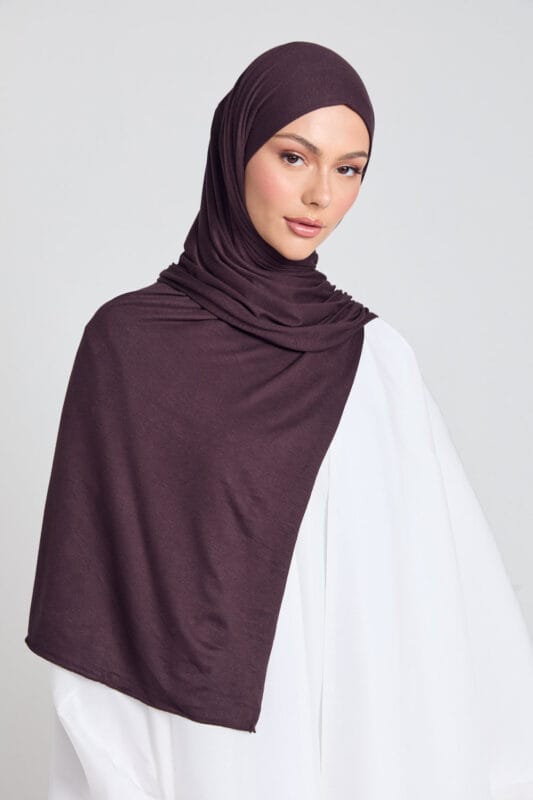
What is Jersey Fabric and Why Does It Work So Well for Hijabs?
Jersey is a knitted fabric rather than a woven one. The difference matters more than it might seem. Woven fabrics have a defined structure that can fray at the edges and resist movement — think cotton poplin or linen. Knitted fabrics like jersey are constructed from interlocking loops of yarn that give the fabric natural stretch and recovery. When you pull a jersey fabric it stretches and then returns to its original shape, which is exactly why it behaves so well when wrapped around the head and tucked or pinned in place.
For a hijab specifically this stretch quality is transformative. A jersey hijab conforms to the shape of the head without bunching or gapping. It does not slip because the slight friction of the knit structure grips the undercap underneath. It does not need pinning in the same way that smooth woven fabrics do. And it maintains its drape through a full day of movement, bending, and activity in a way that stiffer fabrics simply cannot.
Jersey is also one of the most colour-stable fabrics available. The knit construction allows dyes to penetrate deeply and evenly which means jersey hijabs in rich jewel tones like forest green, navy, and deep burgundy hold their colour through repeated washing without fading in the way that printed or surface-dyed fabrics sometimes do.
Types of Jersey Used in Hijabs
Not all jersey is the same and understanding the different types helps you choose the right one for different situations.
Cotton jersey is the most breathable option and the best choice for warm weather. It feels naturally soft against the skin, absorbs moisture well, and has a matte finish that photographs naturally without picking up light. The limitation of pure cotton jersey is that it can lose its shape slightly after repeated washing and it is slightly heavier than other jersey types which can add warmth in summer months.
Polyester jersey is the most common type used in jersey hijabs in the UK market. It is lightweight, quick drying, extremely colour stable, and has excellent recovery it bounces back to its original shape after every wear. The trade off is that polyester does not breathe as well as natural fibres which can make it warmer in summer. However for the majority of the UK year where temperatures are moderate to cool, polyester jersey is the most practical and consistent performer.
Cotton-polyester blend jersey combines the breathability of cotton with the recovery and durability of polyester. Many women find this blend the most satisfying for everyday wear because it provides most of the benefits of both fibres without the significant drawbacks of either. A 50/50 cotton-polyester blend jersey hijab typically washes well, drapes nicely, and stays comfortable across a range of temperatures.
Modal jersey sits at the premium end of the jersey hijab market. Modal is a semi-synthetic fibre made from beech tree pulp and it produces a jersey with exceptionally soft hand feel, excellent drape, and a slight natural sheen that sits between the total matte of cotton and the brightness of polyester. Modal jersey hijabs are particularly popular for special occasions where the slightly elevated fabric quality reads as more dressed up than everyday polyester jersey.
Viscose jersey is another semi-synthetic option with a beautiful drape and slight lustre. It is more fluid than cotton jersey and drapes with a softness that suits looser, more relaxed hijab styles. The care requirement is slightly more involved viscose does not respond well to high heat or tumble drying — but many women find the quality of the drape worth the additional care.
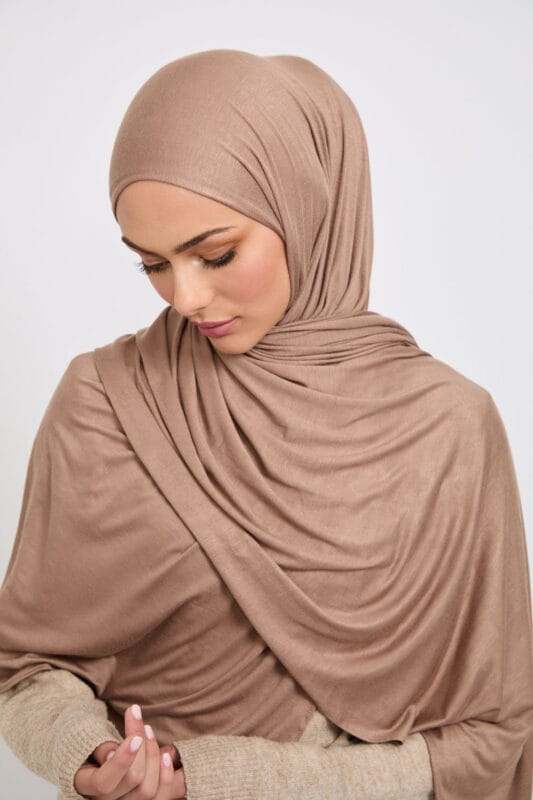
How to Wear a Jersey Hijab – Step by Step
The versatility of jersey is partly about fabric properties and partly about how forgiving it is for different wrapping techniques. Here are the most popular ways to wear a jersey hijab that work specifically well with this fabric.
The simple everyday wrap is where most women start and where many stay because it is genuinely quick and effective. Drape the jersey hijab over your head with one side longer than the other — the longer side should be roughly two thirds of the total length. Take the longer side and bring it across the front of your face, under your chin, and tuck or pin it at the other side of your head. Then take the remaining shorter end and drape it over the longer end at your shoulder, adjusting the volume and coverage to your preference. Because jersey grips itself slightly, minimal pinning is needed and the wrap stays in place through a full day.
The layered volume wrap adds fullness at the side of the head by looping the longer end around the head once before tucking, creating a fuller, more structured silhouette. This style works particularly well with jersey because the slight weight and stretch of the fabric creates natural volume without needing padding or internal structure.
The one-pin minimal style uses a single pin under the chin to secure the jersey hijab and then allows both ends to drape loosely over the shoulders. This very relaxed, contemporary style has become popular among UK Muslim women who prefer a less structured look — the natural weight of jersey means it drapes cleanly without a pin holding shape, which makes this style genuinely effortless.
The turban wrap uses jersey specifically because the stretch allows you to wrap and tuck the fabric tightly without it wrinkling or creasing as a woven fabric would. A jersey turban wrap covers all the hair in a smooth, architectural style that works well for women in professional environments in cities like London and Manchester where a structured head covering reads as polished rather than casual.
Jersey Hijab Colours – Building a Wardrobe That Works
The colour range available in jersey hijabs is broader than in almost any other hijab fabric because jersey takes dye so well. But having access to every colour does not mean wearing every colour a well-chosen core palette of jersey hijabs covers virtually every outfit and occasion you will encounter.
The essential neutrals that every jersey hijab wardrobe needs: black, which pairs with everything and is the foundation of any modest wardrobe; warm ivory or cream, which flatters every skin tone and pairs beautifully with coloured abayas; and one warm mid-tone such as camel, dusty rose, or warm taupe that bridges the gap between black and ivory in your day-to-day rotation.
The colour additions that expand your range significantly without requiring a large collection: a deep jewel tone in the colour family that best suits your skin — forest green, navy, burgundy, or teal which elevates your look for special occasions and professional settings. And a soft, muted tone in a colour that works with the coloured abayas in your wardrobe.
For pairing with Alabayae abayas specifically, jersey hijabs in warm ivory and dusty rose work beautifully across our full colour range because they are warm neutrals that complement rather than compete with coloured abaya fabrics. A sage green abaya from our essential abayas collection paired with a warm ivory jersey hijab is one of the most universally flattering modest fashion combinations available in UK sizes right now.
Pairing Jersey Hijabs with Different Abaya Fabrics
One of the styling questions we hear most often is about fabric mixing — specifically whether a jersey hijab looks right with a more formal or delicate abaya fabric. The honest answer is that jersey works with more fabrics than most women expect.
With nida abayas, jersey is the most natural pairing because both fabrics have a smooth, matte quality. The jersey hijab complements nida without competing with it and the casual-to-smart versatility of the combination makes it ideal for everything from everyday wear to work settings. Our hand embroidered abayas in nida fabric look particularly beautiful with a jersey hijab in a complementary colour — the softness of the jersey drape balances the structure of the embroidery detailing.
With crepe abayas, jersey provides a nice textural contrast. Crepe has a slightly more textured surface than nida and the smooth stretch of jersey against it creates a layered look that works well for both casual and occasion wear.
With linen abayas, a cotton or cotton-blend jersey hijab in a warm neutral or earthy tone mirrors the natural fibre quality of the linen and creates a cohesive, contemporary modest look. A pure polyester jersey can feel at odds with the natural texture of linen so choosing a jersey with at least some natural fibre content makes a noticeable difference with this fabric combination.
With designer pret and embellished abayas from our designer pret collection, jersey can work beautifully in the right colour and weight. The key is choosing a jersey hijab with enough drape to complement the formality of the occasion piece — modal or viscose jersey rather than heavy cotton jersey for formal wear.
With khimar and abaya sets, a jersey undercap beneath the khimar provides the grip and coverage that allows the khimar to sit cleanly without slipping, which is one of the most practical uses of jersey in the modest wardrobe.
Jersey Hijab Sizing – What to Look For
Jersey hijabs come in a range of sizes and the size you choose affects both coverage and styling options significantly.
Standard jersey hijabs are typically 170 to 180 centimetres long and 70 to 75 centimetres wide. This size works for the simple everyday wrap, the one-pin style, and most volume wraps for average-height women.
Longer jersey hijabs in the 185 to 200 centimetre range give more fabric to work with for layered wraps and styles that require extra drape at the shoulder or chest. Women who prefer more chest coverage or who like to create more volume in their wrap often find the longer size more satisfying.
Wider jersey hijabs at 80 centimetres or above provide more head coverage without needing to fold or double the fabric, which can be more comfortable for women who wear their hijab for long periods and prefer minimal fabric layering on the head itself.
How to Care for a Jersey Hijab
Jersey is one of the easiest hijab fabrics to care for, which is one of the reasons it has become so dominant in the everyday modest fashion wardrobe.
Machine wash in cold or warm water on a gentle cycle. Jersey is generally more robust than delicate woven fabrics and can handle regular washing without damage, though cold water washing preserves colour better over time particularly for darker shades.
Do not tumble dry on high heat. The heat can distort the stretch fibres in jersey and cause the fabric to lose its recovery — once jersey loses its stretch it does not return to its original feel. Air dry flat or on a hanger for best results.
Do not iron jersey directly. If the fabric picks up any creasing from storage, a light steam from a clothes steamer or a damp cloth placed between the iron and the fabric on a very low setting will remove any marks. Jersey generally does not crease significantly in wear because the knit structure is naturally resistant to hard creases.
Store rolled rather than folded where possible. Rolling jersey hijabs preserves their shape better than folding and makes them easier to find and grab quickly in the morning.
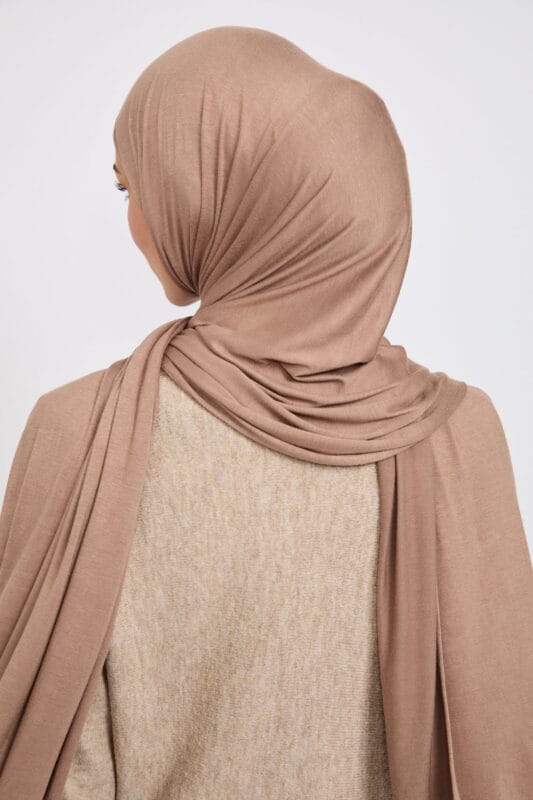
Common Questions About Jersey Hijabs
Is jersey hijab suitable for all day wear?
Yes and this is one of its greatest strengths over other hijab fabrics. Jersey does not require adjustment throughout the day the way chiffon or georgette does. A jersey hijab properly wrapped and pinned in the morning stays in place through work, commuting, school pickup, and evening activities without needing to be rewrapped. For women who wear hijab throughout a full working day in London, Birmingham, or Manchester, this all-day stability is genuinely significant.
What is the difference between jersey hijab and modal hijab?
Jersey is the fabric construction a knitted fabric with stretch. Modal is a specific fibre type made from beech pulp that is often used to make jersey. So a modal hijab is typically a modal jersey. The distinction matters because modal jersey has a noticeably softer, more luxurious hand feel than standard polyester jersey, and a slightly more elevated drape. Modal jersey is worth the price difference for women who find everyday polyester jersey too warm or who want a slightly more refined everyday look. According to the Textile Exchange global fibre report, modal and other cellulosic fibres have a lower environmental impact than conventional polyester, which is worth considering for women who factor sustainability into their modest fashion choices.
Can I wear a jersey hijab for formal occasions?
A modal or viscose jersey hijab in a rich colour or a lightweight jersey with good drape works well for formal occasions when chiffon or georgette is not available or preferred. The key distinction is fabric weight and quality a lightweight, well-draping jersey in the right colour reads as formal. A thick, heavy cotton jersey reads as casual. Choose accordingly.
How do I stop my jersey hijab from pilling?
Pilling occurs when fibres loosen and tangle on the fabric surface, typically from friction during wear or washing. To minimise pilling on jersey hijabs, wash inside out in a mesh laundry bag, use a gentle cycle, and avoid washing jersey hijabs with heavily abrasive items like denim or rough towels. If pilling occurs, a fabric shaver removes it easily without damaging the underlying fabric.
What is the best colour jersey hijab for office or professional settings in the UK?
Navy, charcoal grey, warm ivory, and black jersey hijabs read as most professional in UK office settings. These neutral tones match professional attire easily and carry a sense of formality without effort. Research from the Chartered Institute of Personnel and Development notes that religious dress including hijab is increasingly recognised in UK workplaces as part of inclusive dress code policies, and choosing modest, neutral-toned headcoverings supports a professional appearance that aligns with workplace expectations across sectors.
Does jersey hijab work in summer?
A lightweight cotton jersey or cotton-blend jersey hijab is entirely appropriate for UK summers. The breathability of cotton jersey makes it more comfortable in warmer months than pure polyester jersey. For the hottest days, a single-layer jersey wrap in a lighter colour reflects more heat than dark colours and reduces warmth at the head. UK summers are rarely consistently hot enough to make any jersey hijab genuinely uncomfortable — the bigger challenge is the unpredictability of the weather which jersey handles well because it layers easily over a variety of base clothing.
Jersey Hijab and Modest Fashion in the UK — The Bigger Picture
The dominance of jersey in the UK modest fashion market reflects something broader about how Muslim women in Britain have shaped a distinct modest fashion identity that differs from both Gulf-influenced abaya aesthetics and South Asian traditional dress.
UK modest fashion is practical in a way that accounts for British weather, British working environments, and British commuting. Jersey is part of that practicality — a fabric that performs across four seasons, requires minimal maintenance, and works across the full range of occasions that a UK Muslim woman navigates from Monday to Sunday.
At the same time the quality, colour range, and styling sophistication of jersey hijabs available in the UK in 2026 means that practical no longer means plain. A well-chosen jersey hijab in a rich colour, paired with a quality nida or linen abaya from Alabayae, creates an outfit that is simultaneously modest, comfortable, and genuinely stylish.
Browse our full modest fashion collection at Alabayae — abayas, khimar sets, jilbabs, and inner slips shipped across the UK and Europe. Use our size guide to find your perfect fit and our care and repair guide for fabric-specific maintenance advice across everything we stock.