- Shipping World-Wide

Linen Abaya: Why This Fabric Is Changing Modest Fashion in the UK

Linen abaya ultimate fashion icon fabric :
There is a quiet shift happening in UK modest fashion and linen is at the centre of it. Women who spent years choosing between synthetic nida and heavy crepe are discovering what the fashion world has known for centuries — linen is simply one of the finest fabrics ever made. It breathes, it drapes, it gets better with every wash, and when it is cut into an abaya it produces something that feels genuinely different from everything else in the wardrobe.
At Alabayae we have watched demand for linen and linen blend abayas grow steadily over the past year and the questions we receive about the fabric tell us that women are curious but not always sure what they are getting. This guide covers everything what makes linen special for modest wear, how to style it, how to care for it properly, and why it suits the UK climate better than almost any other abaya fabric.
What Makes Linen Different From Other Abaya Fabrics
Linen comes from the flax plant and has been used in clothing for thousands of years. It is one of the oldest textile fibres in human history, worn in ancient Egypt, traded across the Islamic world along the Silk Road, and now finding its place in contemporary modest fashion worn by women in London, Birmingham, Leeds, and Manchester.
The reason linen keeps coming back across centuries is simple. It does things other fabrics cannot. It is naturally hollow at the fibre level which means air circulates through it in a way that polyester and nida simply cannot replicate. It absorbs moisture and releases it quickly so you stay dry rather than damp. It has natural antimicrobial properties that keep it fresh longer between washes. And it has a texture that reads as elevated even in the simplest cut.
For an abaya specifically, linen brings something especially valuable: structure without stiffness. A well cut linen abaya holds its shape beautifully through a long day, falls cleanly from the shoulder, and moves with the body rather than against it. The slight natural texture of the fabric means it does not cling, does not go see through in bright sunlight, and does not crease in the alarming way that cheap linen garments sometimes do when a quality linen blend is used.
Linen Abaya Versus Nida and Crepe: An Honest Comparison
Most women shopping for abayas in the UK are familiar with nida and crepe as the standard options. Both are good fabrics. But linen offers something different and understanding the comparison helps you decide which is right for your needs.
Nida is smooth, matte, and extremely consistent. It is the most forgiving abaya fabric for everyday wear because it resists wrinkles almost completely and maintains its colour through repeated washing. If you want a fabric that requires essentially no maintenance and looks polished in every condition, nida is the reliable choice. The limitation is breathability nida is a woven polyester fabric and in warm weather or indoor spaces it can feel warm against the skin.
Crepe has more texture than nida and breathes slightly better, with a softer drape that suits flowing silhouettes particularly well. It is the fabric of choice for many occasion wear pieces in our designer pret abaya collection for exactly this reason.
Linen sits in a different category entirely. It requires slightly more care than either — it will crease if left folded for long periods and needs proper hanging storage — but the trade off is a fabric that genuinely breathes, improves in texture and softness with age, and carries a natural visual richness that synthetic fabrics cannot replicate. A linen abaya worn well looks expensive in a way that is difficult to fake.
For women in UK cities who wear abayas from morning to evening through variable weather, a linen blend that combines the breathability of linen with the durability of a small percentage of synthetic fibre is often the ideal practical solution.
The Best Linen Abaya Styles for UK Women
Not every abaya silhouette works equally well in linen. The fabric has its own personality and some cuts make the most of it while others fight against it.
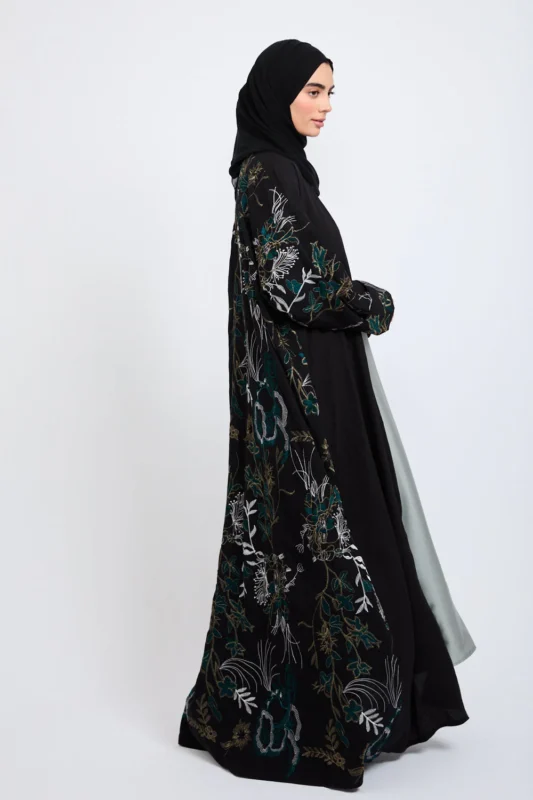
The open abaya in linen is probably the most popular style for good reason. The natural weight of linen means an open front abaya falls cleanly without needing any internal structure to keep it straight. The fabric drapes from the shoulders in a relaxed, elegant way that looks intentional rather than casual. If you have been exploring open abaya styles and want something with more texture and personality than nida, linen is the natural next step.
The straight cut closed abaya in linen creates a very clean, architectural silhouette. Because linen has natural body to it, a straight cut does not collapse or cling but maintains its shape across the body. This is a style that photographs particularly beautifully and works well for both everyday wear and more formal occasions.
Linen blend coat style abayas have become genuinely popular in the UK over the past two years. The structured nature of a coat cut suits the personality of linen — it is a fabric that responds well to tailoring and the combination of proper seams, cuffed sleeves, and button closures with linen fabric creates something that looks more couture than casual.
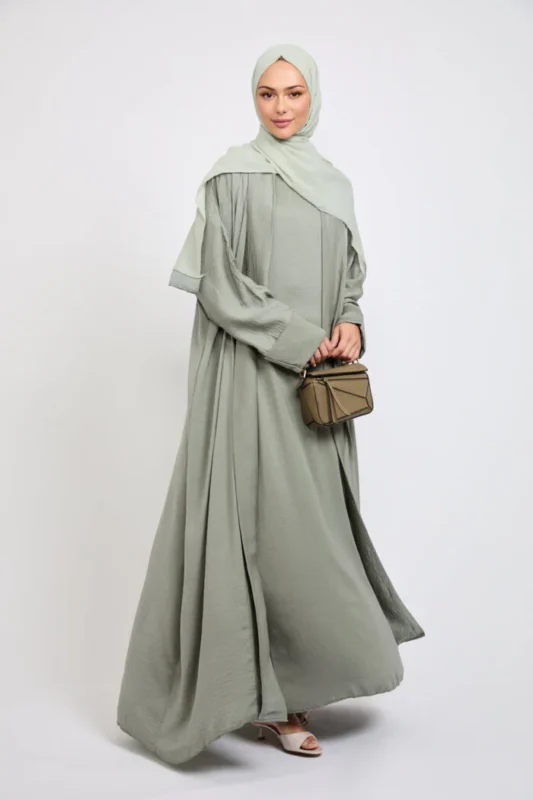
For colour, linen abayas look most natural in softer, earthier tones. Warm whites, sand, natural beige, dusty sage, and soft terracotta all work beautifully with the texture of linen. Black linen abayas exist and they look striking but the fabric shows lint more readily in dark colours so they require slightly more maintenance to keep pristine.
How to Style a Linen Abaya
The best thing about a linen abaya is that it does not need much help. The fabric and texture do the work and the styling can stay minimal.
For everyday wear in cities like Manchester or Leeds, a natural or sand coloured linen abaya over a simple white inner and wide leg trousers, with a cotton or bamboo jersey hijab in a toning colour, creates an effortlessly put together look without trying too hard. The key is keeping everything in the same warm neutral family rather than mixing warm and cool tones.
For a more elevated occasion look, a linen abaya in dusty sage or warm ivory with a silk or georgette hijab in a complementary shade and simple leather sandals reads as genuinely stylish and considered. Linen has a naturally elegant quality that means it does not need embellishment to look special. The texture does the work.
In autumn and early winter, which accounts for most of the UK year, a linen blend abaya layers beautifully over a thermal or ribbed long sleeve base. The natural fibres in linen actually provide mild insulation in cooler temperatures, making it more versatile across seasons than most people expect. This is one of the reasons linen has been used in clothing across every climate zone throughout history — it regulates temperature in both directions.
For hijab pairing, cotton, bamboo jersey, and modal all work naturally alongside linen because they share a similar texture language. Silk and georgette create a beautiful contrast — the luxurious softness of the hijab against the earthy texture of the abaya. Avoid very stiff or structured hijab fabrics alongside linen as the combination can look heavy.
Linen Abaya Sizing at Alabayae
Getting the right size matters even more with linen than with other fabrics because linen has very little stretch. Always size based on your height first and your body measurements second. Our full sizing guide at alabayae.com/size-guide has exact measurements for every size we stock, but as a general reference:
| Size | Height | Fit |
|---|---|---|
| 50 | 5’0″ to 5’1″ | Petite, sits just above ankle |
| 52 | 5’2″ to 5’3″ | Ankle length for petite frames |
| 54 | 5’4″ to 5’5″ | Most popular, true ankle length |
| 56 | 5’6″ to 5’7″ | Comfortable full length |
| 58 | 5’8″ to 5’9″ | Ideal for taller women |
| 60 | 5’11” and above | Floor length fit |
If you are between sizes and prefer a more modest, floor grazing length, always size up with linen. The fabric does not stretch to accommodate extra length the way jersey or crepe might.
Caring for a Linen Abaya Properly
Linen rewards women who care for it properly and punishes those who do not. The good news is that proper linen care is not complicated once you understand what the fabric needs.
Wash in cold water on a gentle cycle. Hot water causes linen to shrink and can damage the fibres permanently. A temperature of 30 degrees Celsius is ideal for regular washing. Use a mild detergent without bleach or optical brighteners.
Never tumble dry a linen abaya. High heat will shrink and distort the fabric in ways that cannot be fixed. Hang to dry in a well ventilated space away from direct sunlight, which can fade colour over time particularly in lighter shades.
Iron while slightly damp if you need to remove creases. A medium heat setting on the linen or cotton setting on your iron works well. Alternatively, a handheld steamer is gentler on the fabric and equally effective at removing the natural creasing that comes with linen wear.
Store hanging rather than folded whenever possible. A linen abaya stored flat for long periods develops fold lines that require significant steaming to remove. Our full fabric care guidance is available on the care and repair page with specific instructions for linen blend pieces.
Common Questions About Linen Abayas
Is linen suitable for year round wear in the UK?
Yes and this surprises most people. Linen is known as a summer fabric but the natural fibre properties that make it breathable in warm weather also provide mild insulation in cooler temperatures. A linen blend abaya worn over an appropriate base layer works comfortably through UK autumn and mild winter days. Pure linen in very lightweight weaves is better suited to summer only, but medium weight linen blends carry through all four seasons.
Does linen wrinkle badly?
Linen does crease more than nida or polyester crepe, but creasing in linen looks natural rather than neglected — it is part of the fabric’s character. High quality linen blends that include a small percentage of viscose or modal crease significantly less than pure linen while keeping most of the breathability benefits. If crease free wear is a priority, a linen blend rather than pure linen is the better choice.
How does linen compare to cotton for abayas?
Both are natural fibres with excellent breathability but linen is stronger, more durable, and has better moisture wicking properties than cotton. According to the Textile Institute, linen is approximately two to three times stronger than cotton at the same thread weight, which means a linen abaya will outlast a cotton equivalent with proper care. Linen also holds colour well and does not pill the way that cotton jersey or cotton blends sometimes do with repeated washing.
Can I wear a linen abaya for Eid or special occasions?
Absolutely. A well cut linen abaya in a rich colour like dusty rose, warm ivory, or sage green with quality finishing is entirely appropriate for Eid, walima celebrations, and formal dinners. The key is choosing a piece with clean stitching and considered design rather than a simple everyday cut. Browse our hand embroidered abaya collection for pieces where the embellishment detail elevates the natural quality of the fabric into something genuinely special.
Is linen abaya suitable for plus size women?
Yes. The natural drape of linen is particularly flattering across a range of body shapes because it falls away from the body rather than clinging. The fabric has enough structure to skim the figure cleanly without pulling or distorting. Our essential abayas collection includes generous sizing across all styles and the size guide at alabayae.com/size-guide covers the full measurement range.
Why Linen Abayas Are Worth the Investment
Fashion moves in cycles but natural fabrics never really go out of style. Linen has been considered a luxury material across thousands of years of human history not because it is trendy but because it genuinely performs better than the alternatives in ways that matter — breathability, durability, and the way it improves rather than deteriorates with age and wear.
A well made linen abaya bought once and cared for properly will last years. The fabric softens gradually, the colour matures, and the garment becomes something that feels personal in a way that fast fashion never achieves. For Muslim women in the UK who wear abayas as a daily practice rather than an occasional choice, investing in quality natural fabric is simply the more sensible long term decision.
According to research published by the Sustainable Apparel Coalition, natural fibres including linen have a significantly lower environmental impact over their lifetime compared to synthetic alternatives when properly cared for and worn long term rather than discarded quickly. For women thinking about the environmental dimension of modest fashion choices alongside the spiritual and aesthetic ones, linen is the fabric that aligns most naturally with values of care, consideration, and longevity.
Browse our full collection at Alabayae and explore modest wear that is built to last, shipped across the UK and Europe, with sizing guidance that helps you get it right the first time.